Why Cataloging Matters
Most collections grow organically. Pieces come in over years or decades, each with its own paperwork scattered across emails, file folders, and dealer correspondence. When a collection needs to be insured, appraised, loaned, sold, moved, or inherited, that scattered record becomes a problem. A proper catalog pulls everything together into a single, searchable source of truth.
Cataloging is also a protection against the worst case. If a piece is damaged, stolen, or destroyed in a disaster, the difference between a clear insurance settlement and a protracted fight is almost always the quality of the documentation that existed before the event.
Our Cataloging Process
- Scoping and scheduling. We discuss the size of the collection, what documentation already exists, and what format you need the final catalog in. From there we schedule the on-site or at-facility appointment.
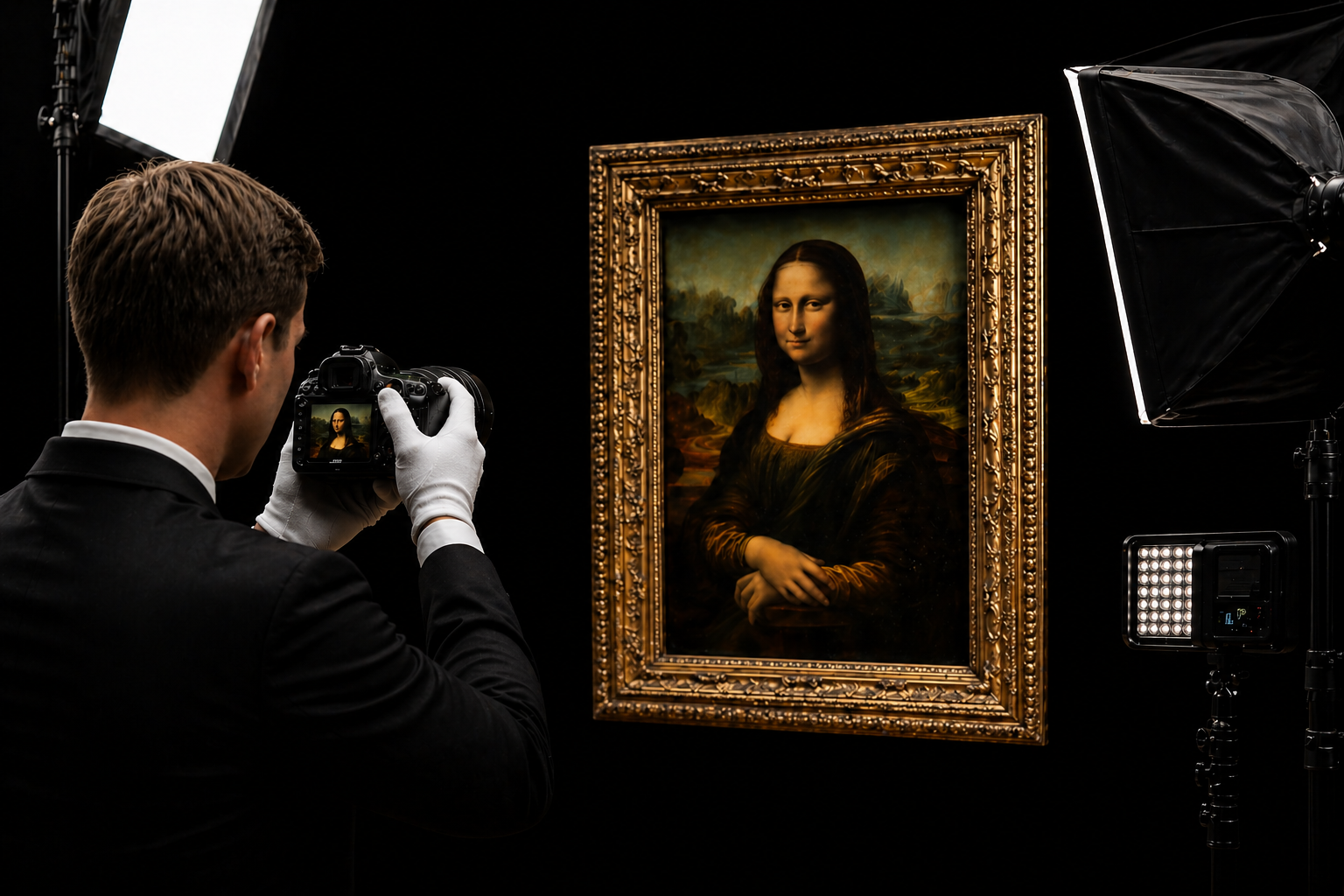
- Photography and measurement. Each piece is photographed front and back with a color reference, and detail shots are captured for signatures, markings, and any condition issues. Dimensions are recorded.
- Condition reporting. Each piece receives a written condition note describing the state of the work at the time of cataloging, flagging any visible issues that should be tracked over time.
- Documentation assembly. Existing paperwork (certificates of authenticity, bills of sale, appraisals, exhibition history) is linked to each piece in the digital catalog.
- Delivery. The finished catalog is delivered as a searchable digital database with photographs and linked documentation. We also provide exports formatted for insurance carriers, appraisers, and estate attorneys.
What Is Included
- High-resolution photography of each piece, front and back, with detail shots of signatures and condition markers
- Dimensions, medium, and provenance documentation
- Condition report describing the state of each piece at the time of cataloging
- Digital inventory database searchable by artist, title, location, or custom tags
- Linked documentation for certificates of authenticity, bills of sale, appraisals, and exhibition history
- Export formats suitable for insurance carriers, appraisers, and estate planning attorneys
Use Cases
Insurance. Carriers increasingly require documented photographs, dimensions, and condition notes for coverage above a threshold. A current catalog makes renewals straightforward and claims defensible.
Estate planning and transitions. Attorneys and executors need clear inventories to plan gifts, donations, sales, and distributions. A catalog is the foundation of every estate conversation involving art.
Gallery inventory. Galleries need to track piece locations across exhibitions, consignments, and storage. A searchable catalog prevents the confusion that comes from inventory spread across multiple spreadsheets and email chains.
Private collection growth. Collectors benefit from a central record as the collection grows and pieces move between homes, storage, and display. Cataloging at the time of acquisition is easier than cataloging retroactively.
Institutions and donations. Museums and institutions may need assistance cataloging new acquisitions or incoming donations for inclusion in their own systems.
Why Choose Vidro for Cataloging
Photography that matches the work. We use appropriate lighting and color references so the photographs actually represent the pieces accurately. Bad photographs make bad catalogs.
Cataloging integrated with storage. If your pieces are stored with us or will be, cataloging is a natural extension of the intake process. The same team that photographs and measures the piece is the team that stores it.
On-site capability. For pieces that will stay with you, we come to your location to catalog. The pieces never have to move.
Records you can actually use. The deliverables are formatted for the people who will actually need them: insurance carriers, appraisers, attorneys, and your family. Not just pretty to look at.
Paired With Storage, Packing, or Installation
For pieces already stored with Vidro Art Storage, cataloging is a natural extension of the intake process. For pieces not yet in our care, we can schedule on-site cataloging appointments or catalog as part of a pickup. Cataloging often pairs with storage, packing, or installation in a single coordinated engagement.
Frequently Asked Questions About Art Cataloging
What format do you deliver the catalog in?
Catalogs are delivered as a searchable digital database with linked photographs and supporting documentation. We also provide exports in formats suitable for insurance carriers, appraisers, and estate planning attorneys. If you use a specific inventory system already, we can discuss compatibility at the quote stage.
Can you catalog art that is not stored with you?
Yes. We schedule on-site cataloging appointments at your residence, gallery, or office. Cataloging is a standalone service and does not require that pieces be in our storage. For clients whose pieces are with us, cataloging can be combined with intake.
What does the condition report include?
Each piece is photographed front and back, with detail shots of signatures, markings, and any condition issues. A written condition note describes the state of the piece at the time of cataloging and flags any visible issues. This gives you a baseline against which future inspections can be compared.
How long does a cataloging engagement take?
Small collections can typically be cataloged in a single appointment. Larger collections are scheduled across multiple days based on piece count and complexity. We set the timeline at the quote stage based on the size of your collection and the depth of documentation needed.
For more general questions, see our full FAQs page.